Lightbulbs
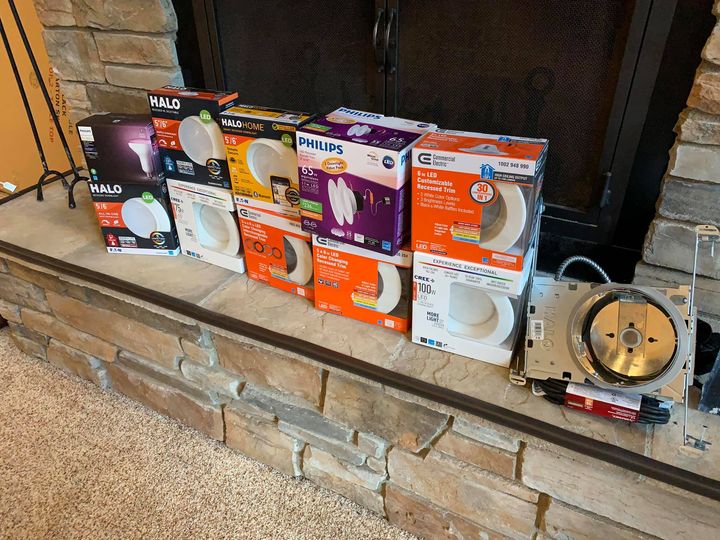
I picked up all of the local options for LED can lights, and ordered 8 more off Amazon. I am going to build a test fixture and do some measurement and analysis, as I don’t trust what the box says.
I picked up all of the local options for LED can lights, and ordered 8 more off Amazon. I am going to build a test fixture and do some measurement and analysis, as I don’t trust what the box says.
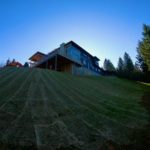


Lots of new things underway – With that ridiculous water tank done, the storm water filter garden is being built. Hole, liner, rock, and 25 yards of really nice soil plus 78 specific plants picked by the city. Yea. All of this to protect the soil from rain falling from the sky.
Cedar walls/ceiling for the vault, more paint on the outside, drywall delivered. We installed two temporary 20kw furnaces today to help heat and dry out the house.. A good way to break in the meter! We are also going to install the two infratech heaters, and those guys are 6kw each. If I can get a few Teslas on the chargers we can see how much that transformer can really dish out. It is rated for 75kw, but no doubt in this cold weather it can do a lot more.
Drywall starts tomorrow as well as a bunch of interior trim work, and of course more exterior painting and some cedar ceiling work.

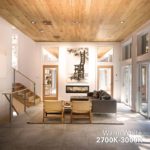


I need to select some light bulbs for the new house.. I checked today and there are 230 indoor can lights, 30 external can lights, and 38 indoor shop/garage fixture lights. (plus probably 30 other regular fixtures, but those are something Kristin is dealing wtih).
For the indoor can lights the fixtures are 6′ cans, so they can fit a variety of options. I would tend to do the recesssed lighting trim, which is a single trim+led unit (not a bulb that unscrews). This is pretty common in very new houses, especially if you want a sealed light look.
Within this variety there are two key variables –
Brightness (~600,~800 or ~1100 lumens, which corresponds with ~ 75,100,150 watt equivalents)
Color Temperature – 2700, 3000, 4000, 5000K. A typical old school incandescent light is in the 2700K range.
A typical LED fixture in 2700K, 660 lumens, is around $4 in quantity.
There are LED fixtures that have a selectable switch on them you can set at install (or change) that gives you 4 color temps. Those fixtures are around $25 each.
There are also LED fixtures that have remote selectable color temp (via zigbee for instance), and they are around the same cost ($25 each).
Any comments/wisdom on color temp choice? I would tend toward 3K for most things, and if there were a location I might want the user adjustable color temp it would be the master. That would facilitate the color temp changing in the evening and morning with the other automation tasks.
As for the brightness, I need to do some light mapping to see what will work best. If every bulb was an 800-900 lumen bulb that would be around 3kW of power (~ 12.1w each). Consider that if these were old school 100w bulbs that would be 26kw!
The outdoor cans are a little different. For those I will do some kind of controllable RGBW bulbs.
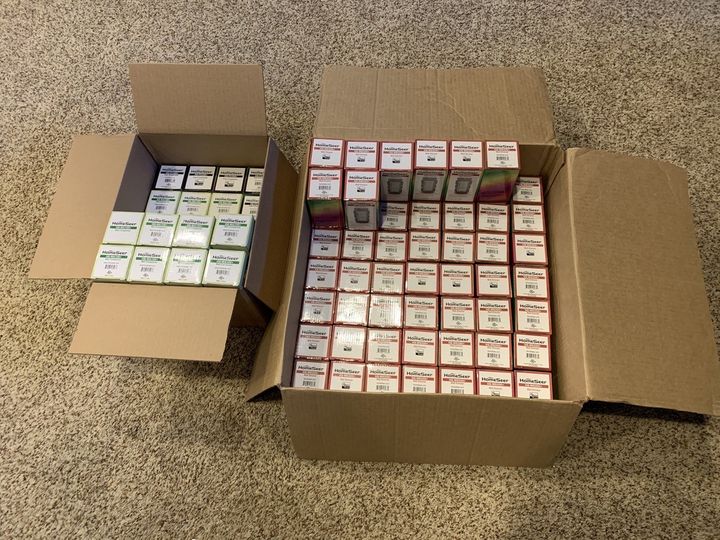
81 Z-Wave switches ready to install! I am using these Homeseer WD-200+s, which had individually addressable RGB leds.
It has been pretty amazing to see the progression of the R35 GTR platform over the last 10 years. In 2010 the fastest GTR was in the 9s. In 2011 the fastest GTR was in the 8s. In 2013 the fastest GTR was in the 7s, and in 2017 the fastest GTR was in the 6s. We are now right at the mid 6s and getting faster. Imagine 0-225 mph in 6 seconds!
It truly is an amazing platform surrounded by amazing people.
Congratulations to Gidi Chamdi, Extreme Turbo Systems, Michael Roark and everyone else involved in this milestone.

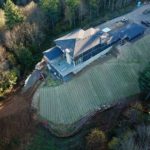
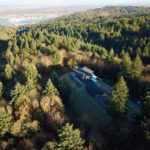


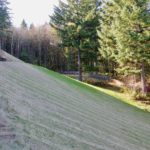
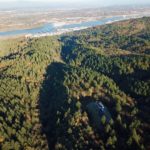
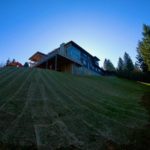

A small update – The storm water tank is completed and buried, with the filter planting area being the last thing needed.
The ceiling for the outside rear deck is getting installed, and you can see the spots for the Infratech heaters. 12,000 watts of juice.
The side grass is also starting to come in.

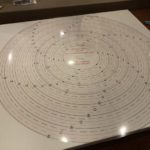
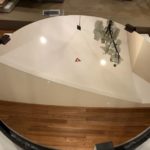

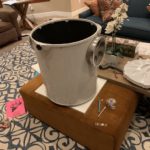

I put a new 16″ primary mirror in my telescope a few months back, and last night I got around to installing the center dot and mounting the glass in the tube.
The center reflective marker is critical for performing collimation, which is the process of getting the primary and secondary mirrors aligned such that the wavefronts are both centered, and collinear. I use a laser collimator which allows excellent alignment of both the primary and secondary mirrors.
It looks to be cold and clear tonight, so hopefully I can get it out and see the seeing. Audrey is particularly interested in looking at Jupiter.

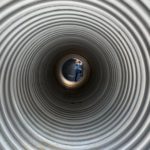
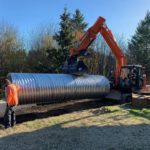
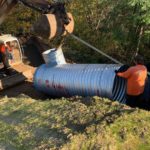


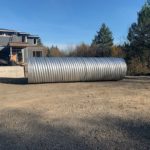
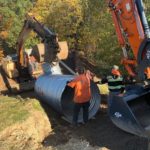

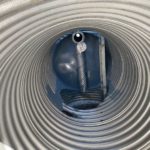


Our WWIII Nuclear Fallout shelter has arrived, complete with 2 fully rotating gun turrets. Installation is underway.
Just kidding. This is the water tank for the stormwater management system. 25,000 litres of water storage. It is composed of three pieces with what are pretty much gigantic exhaust clamps to hook them together. Concrete is poured on the inside of the tank as well once placed.
The water from the house gutters goes into a filter bed first (with plants), then into this tank, and then the outflow goes down the hill 1000ft to a stream.
Needless to say this is massively over engineered. The excavators think it is pretty cool, as does Audrey.
Kristin was driving back to our old house when she passed these on an articulating truck on Skyline and she thought they must be for some huge commercial project somewhere. Ha!
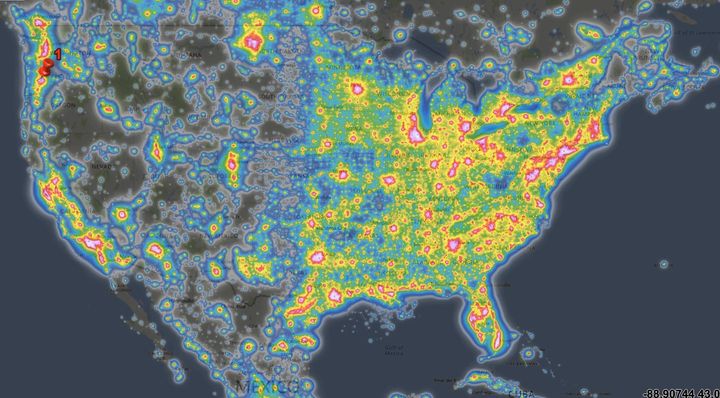
Every time I look at the light pollution overlay, I think ‘damn, east coast sucks for astronomy!’. It is amazing how defined the line is between east and west, as if people just stopped at that longitude. Those dark swaths in Oregon, Nevada, Utah, Idaho, and Montana are pretty awesome.


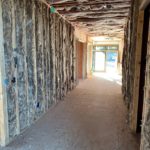
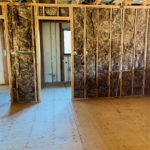

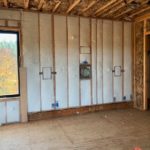
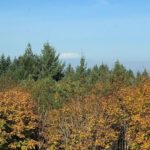

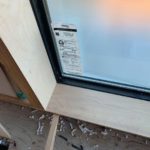

Fall colors are really coming in as the trees change, and interior trim work has started. Audrey refers to the house as ‘furry’ at this stage, as all of the insulation is done. We are experimenting with doing a lightly trimmed window in a more modern way ( not drywall wrapped, but similar with wood trim).
The flat roof sections still need to be installed (metal roof there), and the siding and exterior trim is at about 80%. Painting is following the trim closely and should hopefully finish up next week.
The driveway is getting prepped, and power has been conduit routed along the driveway on both sides. I did a power outlet every 75 feet or so on both sides of the driveway all the way from the house to the gate, with the front half fed by a dedicated meter at the gate, and the back half fed by the house.
It looks like we will need about 28,000 sq ft of asphalt. Back of the envelope says that is a tad over 1 million pounds of asphalt, and probably another half a million pounds of rock.
Based on the remaining work I would guess we will move in late January to early February, which isn’t terrible given we started the project in June of 2017.